
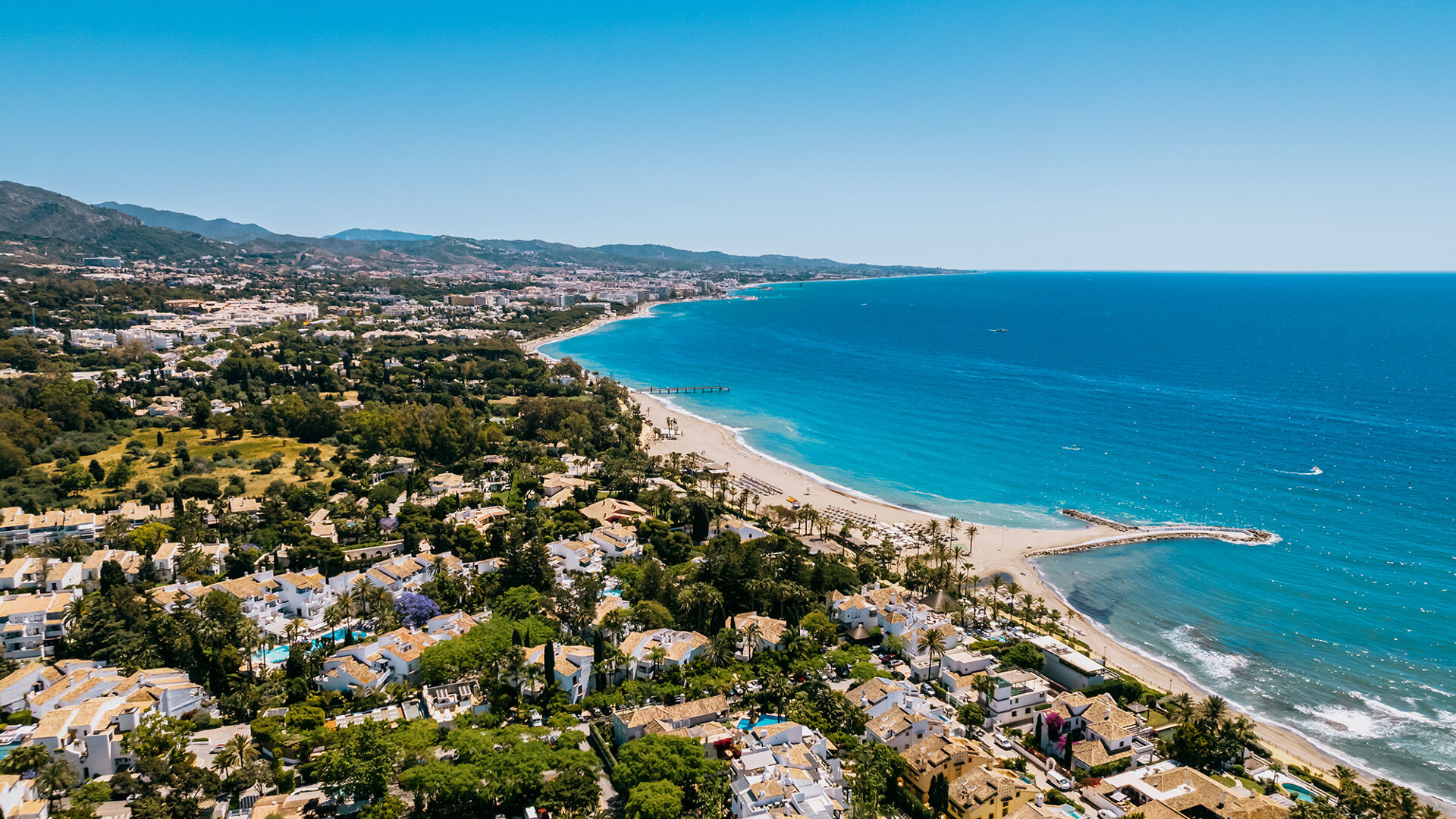
One of the most important — yet least understood — forces shaping the Costa del Sol property market in 2026 is land scarcity. While international demand, lifestyle migration, and rising construction quality receive much attention, the real structural driver behind sustained price growth is simple:
There is very little coastal land left to build on.
Across Marbella, Estepona, Benahavís, Mijas, and Málaga, demand continues to rise while buildable land remains severely limited due to zoning restrictions, environmental protections, geography, and municipal planning frameworks. Combined with foreign‑buyer demand and record‑low new‑build supply, this creates a market where prices have a strong structural foundation supporting long‑term growth.
This blog explains why land scarcity is so influential, how it affects buyers and investors in 2026, and why understanding this dynamic is essential for anyone purchasing property on the Costa del Sol.
- Land Scarcity Is Now the #1 Driver of Price Growth on the Costa del Sol
Market research shows that the supply of buildable land in the Costa del Sol is extremely limited, especially in prime coastal locations. While, in theory, land may exist inland or in protected areas, only a fraction can receive planning approval.
According to 2026 market analysis, the primary challenge for developers is the shortage of land that can legally be developed under strict planning rules.
This bottleneck pushes development into new pockets and makes premium plots increasingly rare.
What this means for prices:
- Coastal land → scarce
- Coastal new builds → scarce
- Demand → rising
- Prices → structurally supported
This is the opposite of a speculative bubble. Land scarcity forms a natural price floor that makes the Costa del Sol one of Europe’s most resilient property markets.
- Coastal Areas Are Nearly “Built Out”;Especially Marbella, Benahavís & Estepona
Some of the Costa del Sol’s most desirable locations face near‑zero availability of buildable coastal land. The combination of mountains, coastline, protected rural land, and strict planning regulations means very few new prime plots come to market.
Key regions affected:
- Marbella: one of the most land-constrained coastal cities
- Benahavís: limited prime land, especially near La Zagaleta
- Estepona: large growth, but premium beachfront land is scarce
- Mijas Costa: increasing density limits supply
- Málaga city: very limited central development land
Developers must therefore:
- build inland
- redevelop older buildings
- focus on vertical, premium developments
- compete aggressively for remaining land
This scarcity is one of the reasons why luxury areas like Marbella and Benahavís saw price growth of 9–16% in 2025 alone.
- New-Build Supply Cannot Keep UpwithDemand
Despite high demand from international buyers, new-build homes represent only 8.7% of all Spanish real estate sales.
This is a dramatic imbalance.
Developers are limited by:
- land availability
- slow municipal planning approvals
- protected green areas
- rising construction costs
- high demand from foreign buyers
- limited coastal expansion possibilities
Even when developments launch, they often sell out off‑plan at record speed — especially in Málaga, Estepona and Benahavís.
Results:
- Prices for new builds rise faster
- Best units disappear early
- Investors lose access if they wait too long
- Resale prices benefit from the supply gap
- Foreign Demand Intensifies the Pressure on Limited Supply
International buyers continue to purchase at unprecedented levels. In 2025, over 71,000 homes were bought by international clients, representing 20% of all transactions.
Regions hit hardest by land scarcity are the same regions with the highest foreign demand:
- Alicante — 35% foreign buyers
- Málaga (Costa del Sol) — 28.4%
Where international and relocation-driven demand is strong, prices will continue to rise, even with slower national growth.
Foreign buyers also prioritize:
- sea views
- modern energy-efficient design
- proximity to schools
- premium gated communities
- beachfront locations
These preferences further intensify competition for scarce coastal land.
- Scarcity Creates Strong Long‑Term Value for Property Owners
Land scarcity provides one of the safest long‑term investment foundations in real estate.
It leads to:
–Higher price resilience
Regions with limited land rarely experience large price drops.
–Faster capital appreciation
Prime areas appreciate faster due to competition for limited housing stock.
–Better rental demand
Coastal locations with limited expansion remain high-demand rental areas for:
- tourists
- expats
- remote workers
- international families
–Higher resale liquidity
Properties in land-scarce locations tend to resell quickly — and often at premium prices.
This explains why Malaga province, especially Marbella, Estepona and Benahavís, repeatedly outperforms national price averages.
In fact, Málaga saw price increases of ~12% YoY in January 2026.
- Renovation Properties Are Becoming More Valuable
Because prime land is almost fully built out, many buyers are turning toward:
- older villas
- dated apartments in premium locations
- townhouses near the coast
These properties offer:
- unbeatable locations
- renovation potential
- high capital appreciation
- strong rental yields
Market analysis confirms that buyers in 2026 are increasingly willing to invest in renovation to create modern, personal living spaces, especially since new-build options are limited.
- Which Areas Still Offer Buildable Land?
While the prime coastline is scarce, several zones still offer potential:
- Mijas (La Cala, Las Lagunas, Mijas Costa)
The largest number of new projects; over 25,000 homes are planned for 2025–2026.
- Estepona West
Growing rapidly with sustainable developments and mid‑range pricing.
- Málaga West (Airport Corridor)
Urban expansion and tech-industry growth fuel new regeneration projects.
- Benahavís inland zones
Luxury hillside development continues, but land is quickly being absorbed.
These areas offer a mix of:
- affordability
- rental potential
- long-term appreciation
They remain attractive for investors seeking opportunities before land scarcity increases further.
- Why 2026 Is a Strategic Year to Buy Despite Rising Prices
Because land scarcity is structural — not market‑driven — waiting does not lead to lower prices.
2026 offers an advantageous buying window due to:
- stabilized mortgage rates
- predictable price growth (5–6% nationally)
- sustained foreign demand
- off‑plan units still available in early phases
- rental demand at all-time highs
Delaying a purchase typically means:
- paying more next year
- losing access to prime units
- competing with more international buyers
Passive buyers lose.
Proactive buyers gain.
Conclusion: Land Scarcity Will Continue to Drive Costa del Sol Prices for the Next Decade
The Costa del Sol faces one of the most significant land shortages in Spain — and this scarcity will continue to shape investment performance in 2026 and far beyond.
With:
- extremely limited buildable land
- rising international demand
- strong lifestyle migration
- rapid off‑plan absorption
- shortage of new-build homes (8.7% of sales)
the region’s price stability is not only predictable — it is structurally guaranteed.
For buyers and investors, this means:
- buying now = lower entry cost
- waiting = higher prices & reduced availability
If you want to secure a high-performing asset in Spain’s most in-demand region, acting during this stabilised phase of the market is the most strategic move.
Need Help Identifying High‑Potential Areas Despite Land Scarcity?
ViVi Real Estate specializes in:
- sourcing scarce coastal opportunities
- accessing off‑market and pre‑launch new builds
- identifying renovation properties with strong ROI
- guiding international buyers through legal & tax requirements
- maximizing rental income in high-demand areas
Explore smart opportunities today at www.vivi-realestate.com